trentonrgyy837.pinehavenscope.com

Comprehending Peptide Pureness: What 99%+ Truly Suggests

Chemical & Physical Peptide Analysis

This level of thorough analysis ensures the peptide's accuracy-- implying the sequence and purity are exactly as classified-- which is crucial for experimental reproducibility. By confirming structure via several validated methods, lab recognition warranties that scientists receive a high-purity peptide that will certainly carry out as expected in the laboratory. Research laboratory validation of peptides is not only a clinical best technique-- it's usually a regulative demand when peptides are utilized in therapeutic advancement or clinical study.
  • For peptide purity screening, reverse-phase HPLC is the basic conceptual version.
  • BOC Sciences provides increased security, light stability, and chemical destruction experiments to methodically assess solution stability dangers.
  • Some peptides stop working not since the series is wrong, however due to the fact that their physical behavior in real solvents is inadequately understood.
  • Peptides consisting of methionine or cysteine deposits are susceptible to oxidation.
  • If the major height has a visible "shoulder"-- a bump on one side-- that typically suggests a very closely relevant impurity (like a deletion peptide) that the column could not totally solve.
Along with HPLC and MS, specialized laboratories may utilize orthogonal techniques for included accuracy. For instance, capillary electrophoresis can be made use of to separate extremely hydrophilic peptides or to confirm results, and MALDI-TOF mass spectrometry can help in mapping larger or changed peptides. Several peptide manufacturers or distributors will supply a COA (Certification of Analysis), as an example our bpc 157 tb 500 mix, that includes the purity percent by HPLC and identification verification by MS for each and every batch. Top-tier labs frequently report peptide purity well over 95%, frequently ≥ 98-99%, by utilizing state-of-the-art HPLC and MS analyses. They likewise test both raw materials and finished peptide vials, which assists capture any type of contaminations, degradation items, or solution incongruities.

What Can We Provide?

At Maxed Out Compounds, every item we supply includes a clear testing record and transparent documents. Our mission is to sustain researchers with high-purity, verified compounds that fulfill the demands of modern-day clinical research-- absolutely nothing more, nothing less. Independent, third-party testing plays an essential role in guaranteeing neutrality and precision. By utilizing exterior laboratories for verification, providers remove predisposition and uphold clinical credibility. It's an extra step that gives researchers self-confidence that each peptide satisfies regular, proven requirements. This grade fits the majority of in vitro study applications-- receptor binding assays, enzyme activity research studies, and cell society experiments.

Reading Mass Spectrometry Results On A Coa
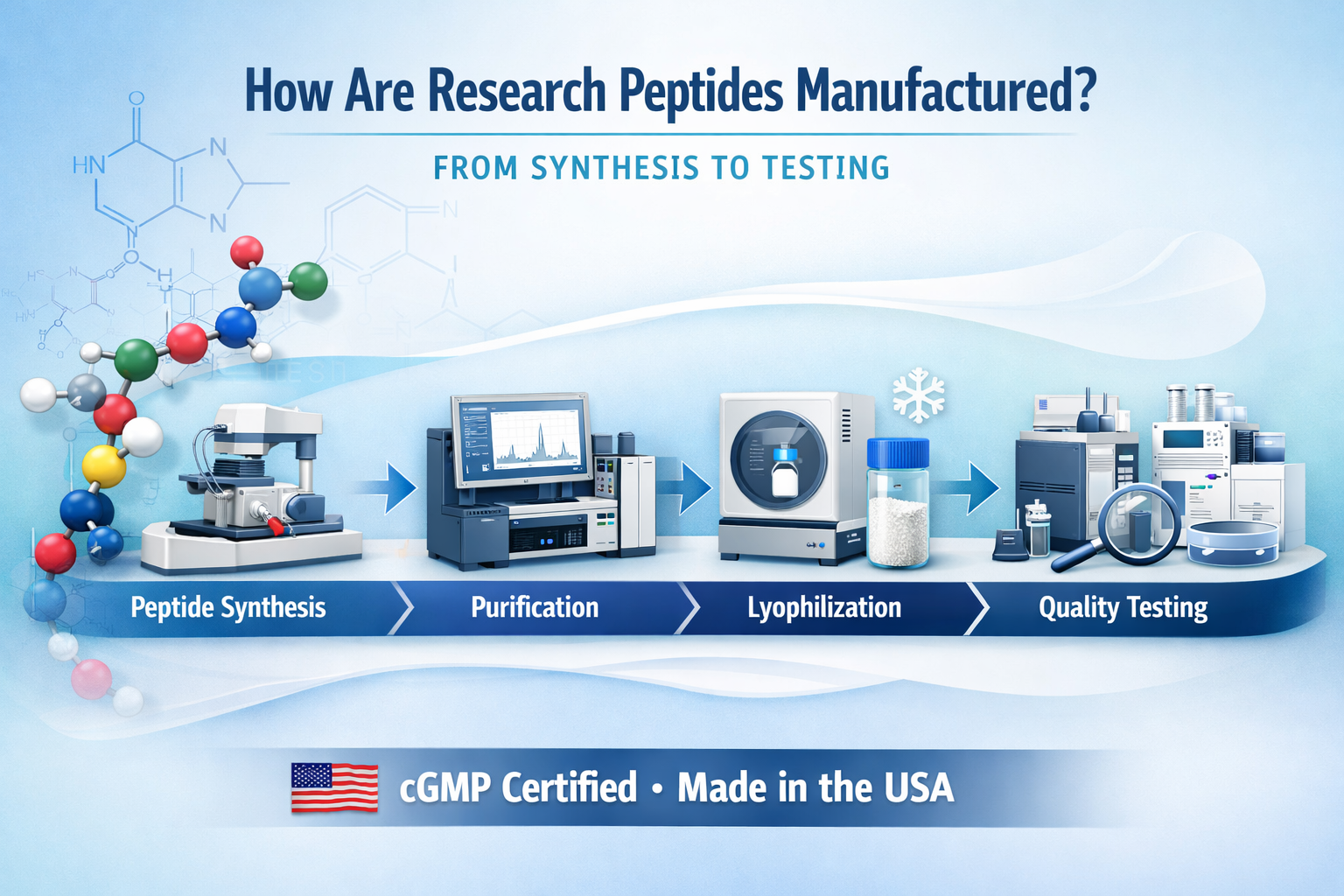
Accurate resolution of the pI with capillary isoelectric concentrating (cIEF) aids in peptide characterization and is vital for applications where peptide fee impacts feature Biotechnology Research and security. We assist differentiate chromatographic pureness from real peptide amount so clients can prepare solutions and compare great deals with higher confidence. We select methods according to peptide size, hydrophobicity, cost account, and adjustment condition rather than requiring every example right into one layout.

Precision Testing For Purity, Effectiveness, And Efficiency

The table listed below web links usual project objectives to useful logical panels and the type of decisions they aid support. Asparagine and glutamine residues can go through deamidation, transforming the peptide's cost and website hydrophobicity. Deamidation is one factor storage space problems matter, especially after a peptide has actually been reconstituted. Every product we carry is lab-tested and verified by third-party companions, so researchers know exactly what they're dealing with. Peptides containing methionine or cysteine deposits are vulnerable to oxidation. Methionine can be oxidized to methionine sulfoxide; cysteine can develop undesirable disulfide bonds or be oxidized to sulfinic or sulfonic acid derivatives.